- Home
- Basic embroidery stitches
- Stitch a French Knot
FRENCH KNOT TUTORIAL
Tired of Your French Knots Slipping Through The Fabric or Canvas?
A patient, step-by-step approach that finally makes those little knots behave — from someone who's been in the tangled-thread trenches.
We've All Been There
Sound familiar? You pull your needle through the fabric or canvas, expecting a neat, perky little dot, but instead you get... a tangle. A loose loop. A sad, droopy bump that looks more like tangled fishing line than an elegant stitch. Or you can't see anything because the knot has pulled through to the back of your work.
Believe me, I've been there. I used to stare at my hoop in defeat, wondering how everyone else made it look so easy while my work was a field of wonky knots.
If you're feeling that frustration, let me tell you something: you don't lack talent. You just haven't been shown the right approach to french knot embroidery yet.
It's not about having "magic hands." It's about slowing down and giving yourself permission to doodle with knots.
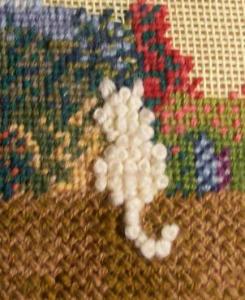
From Rushing to Relaxing
My "aha!" moment didn't come from a fancy tool or a complicated tutorial. It came when I stopped trying to make a project and started to just play with french knot stitches.
For 15 minutes each evening, I would just sit and make knots. No pressure. No pattern. I called it my knot-doodling time. Slowly, patiently, something started to click.
The Simple 4-Step Rhythm for Perfect French Knots
Let's break down the motion that finally worked for me. Think of it as a gentle, four-step rhythm. I've used a chunky thread here so you can easily see what my hands are doing in the photos below the steps.
Come Up for Air
Bring your needle up through the fabric exactly where you want your knot to live. Easy.
Wrap, Don't Strangle
With your other hand, hold the thread taught (but not tight!). Wrap it once around your needle for a small knot, or twice for a slightly chubbier one.
Find a New Home
Here's the most important part! Insert the tip of your needle back into the fabric right next to where you came up, but not in the very same hole. Give it a little space—just a fabric thread or two away.
A Slow, Gentle Pull
Keep holding the wrapped thread taut with your other hand as you slowly and smoothly pull the needle all the way through to the back. A nice, even motion is all you need.
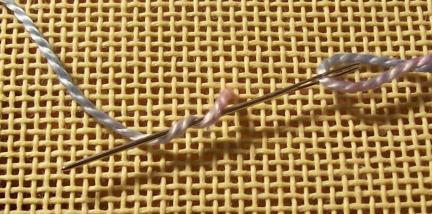
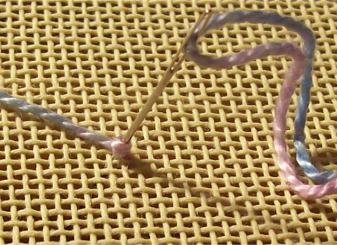
That's it. That's the whole dance.
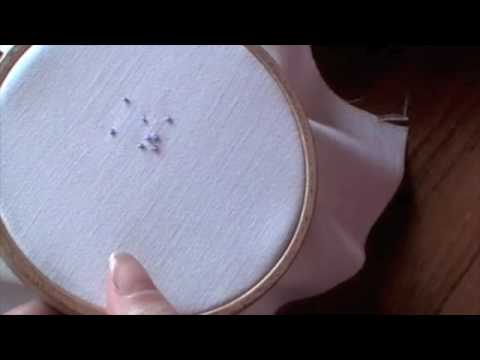
Now Watch the slow, steady rhythm in action. No rushing needed!
What Fellow Stitchers Are Saying
"This is the best video that I have found to teach French Knots. Worked first time and consistently :) Thank You so much"
"Thank you very much! This is the only tutorial that really worked for me :)"
"French knots have been very confusing to me for ages, but this video has made them a lot clearer. Thank you again!"
My Top 3 French Knot Secrets
During my nightly knot-doodling sessions, I ran into every problem imaginable. These three little secrets were the ones that made the biggest difference.
Give Your Knot Some Space
When you put your needle back down, never go back into the exact same hole. Moving over by just one or two threads of the fabric gives the knot something to grip onto, so it sits proudly on top.
Shorter is Sweeter
Work with a shorter length of thread—about the length from your fingertips to your elbow (12–18 inches). It's far less likely to tangle and makes maintaining even tension a breeze.
Find a Little Mantra
Say a three-part mantra as you stitch: "Wrap… anchor… pull." This simple verbal cue keeps your hands and mind focused on a steady, consistent rhythm.
Your Tidy Knots are Waiting
Two years ago, I would have avoided any pattern that had French knots. Now, they're one of my favorite ways to add texture and detail.
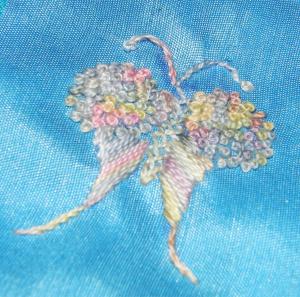
Every wonky knot you make today is teaching your hands something. It's not a sign of failure; it's the foundation of your future skill.
It doesn't come from a flash of talent, but from the quiet, happy rhythm of patient practice.
You might like these
How to Embroider Flowers: 3 Easy Stitches for Total Beginners
Feeling overwhelmed by all the stitches? Let's skip the stress and learn 3 easy embroidery stitches to create beautiful flowers today. Your friendly guide
My Secret to Perfect Cretan Stitch | Step-by-Step Tutorial
Tired of messy, wobbly Cretan stitch? Learn my simple secret in this step-by-step tutorial. I even show you my own mistakes to help you succeed!
How to Turn a Corner with Blanket Stitch: A Step-by-Step Guide
Our guide on how to turn a corner with blanket stitch gives you the confidence to create polished, professional-looking edges you’ll be proud of every time.


Stay connected between projects
If you’d like occasional updates from my embroidery room, including new patterns, gentle tips, and little things I think you might enjoy, you’re warmly invited to join the Stitchin’ Times newsletter.
About Me - Contact Carol - Privacy Policy - Site Map - Testimonials
Please do not copy the content of this site. It is protected by Copyscape.
Copyright © 2006- www.needlework-tips-and-techniques.com All rights reserved